
€105.00
Areas of application for this Montessori material:
In stock
Material Description
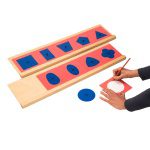
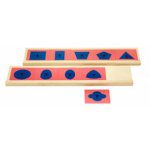
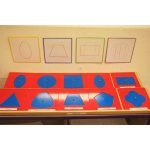
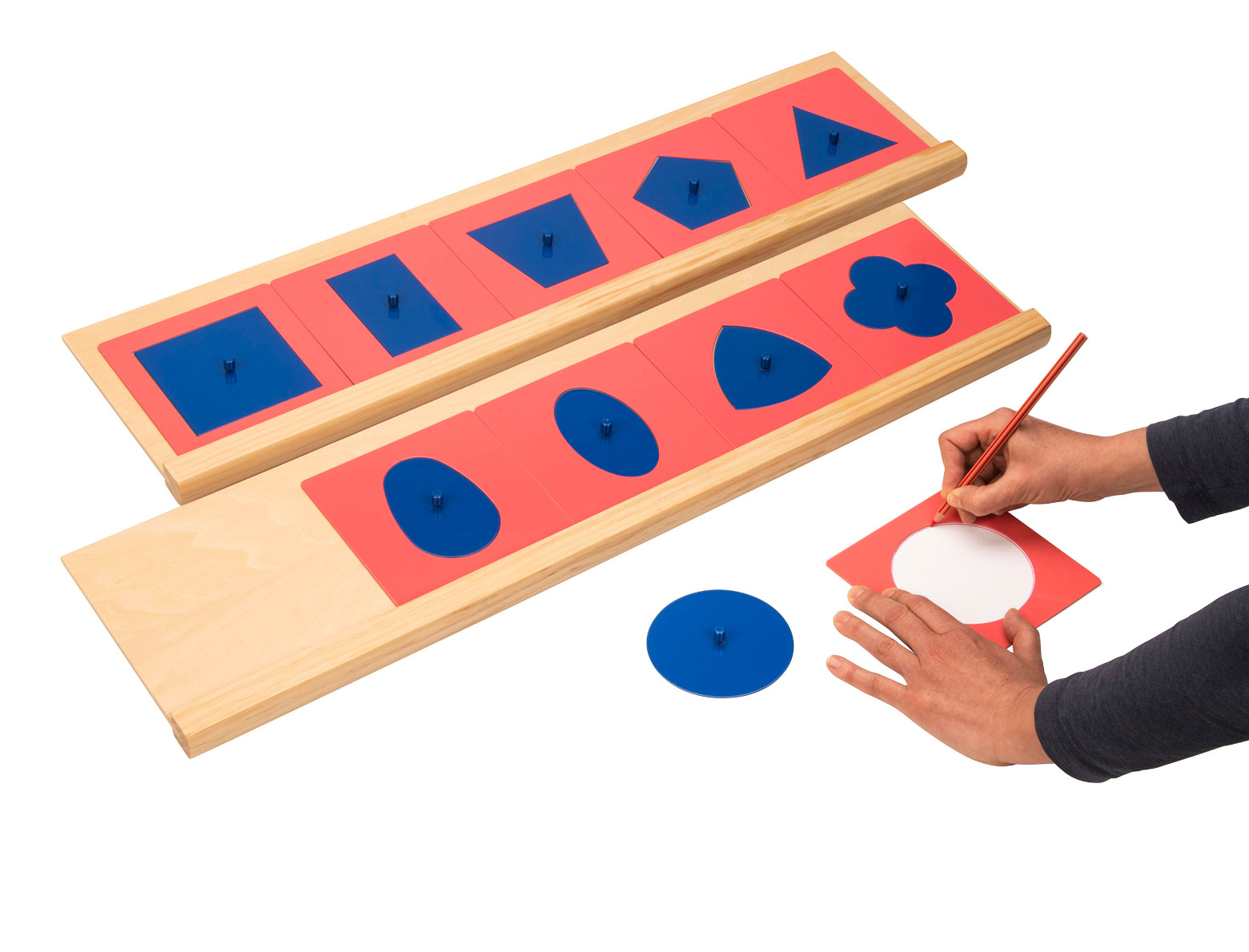
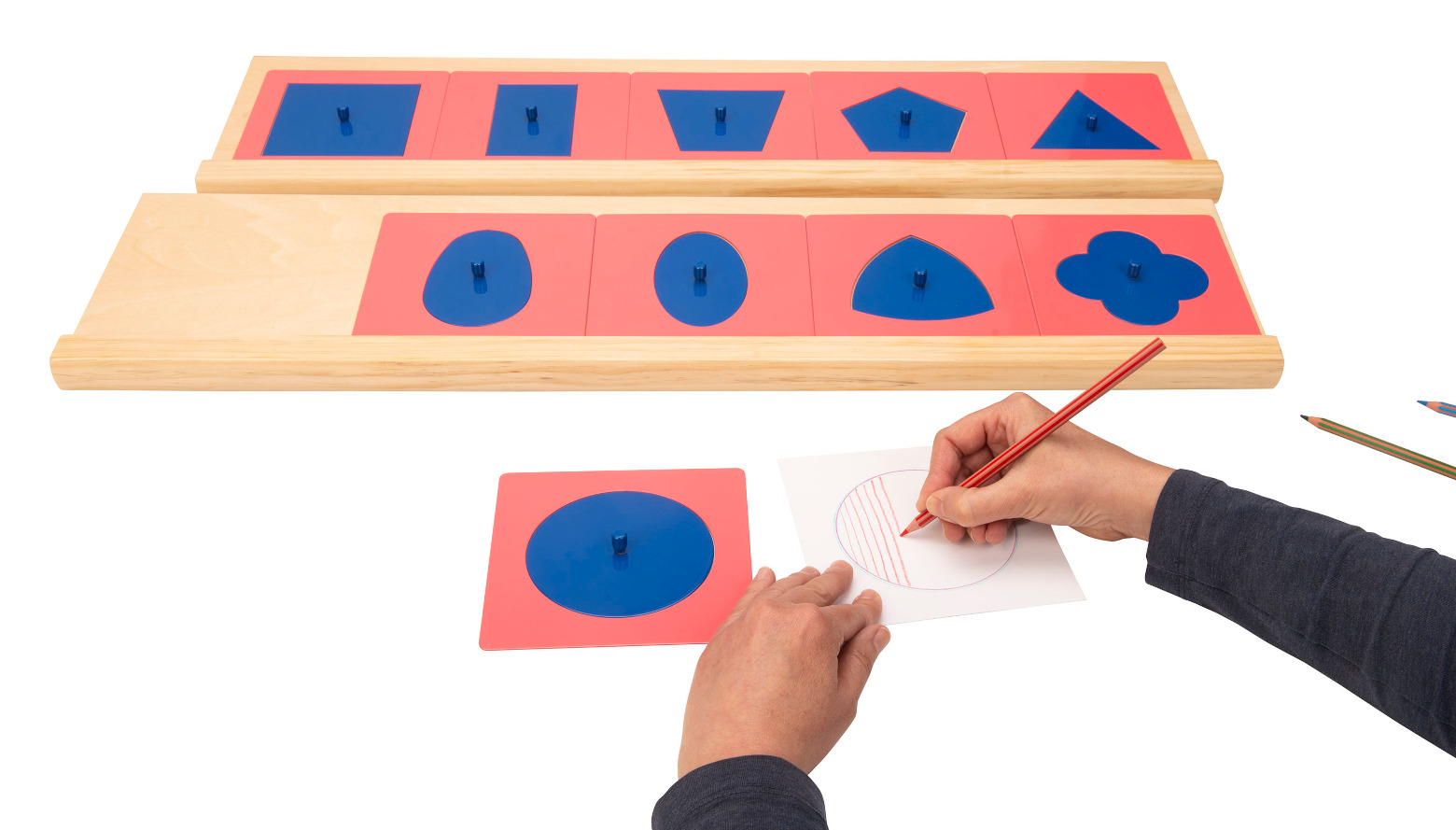
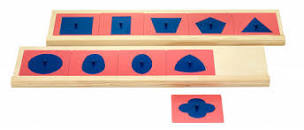
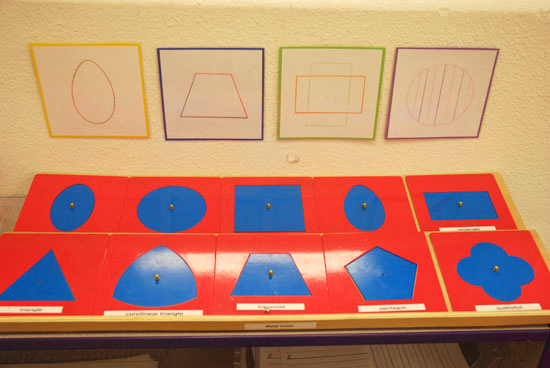
We have 2 series with 10 metal inserts in frames. The frames are pink and the metal insert, which in the middle also has a knob-handle to hold it, is blue.
The shapes included are a circle, an oval, an ellipsoid, a tetrahedron, a curvilinear triangle, a square, a rectangle, a trapezoid, a pentagon, and an equilateral triangle.
In one row we have all curvilinear shapes and in the other row all shapes consisting of straight lines.
Also included are:
You will need from home:
Objectives:
Presentation
Firstly, the children must watch the demonstration from us.
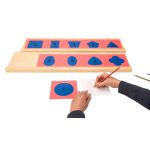
We place on the work surface 1 sheet of paper, 3 different colored pencils and the metal insert of the ellipse.
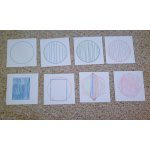
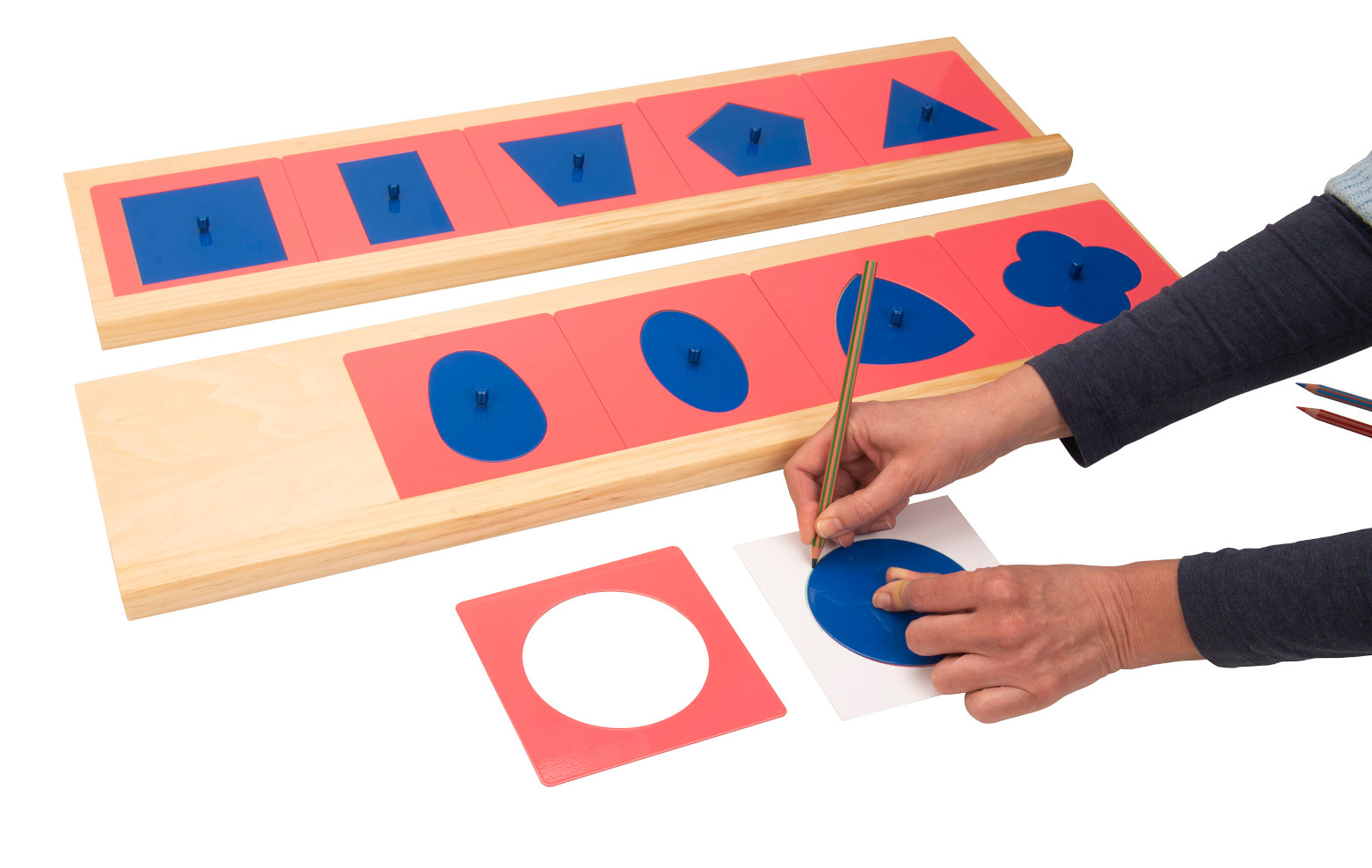
First of all, we take out the frame of the ellipsoid, place it on the paper and we make its outline with a wooden paint. We show in very slow motion how to hold the crayon! Attention: the wood paint should end up in the same place where it started.
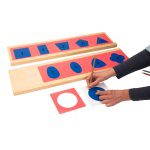
We remove the ellipsoid box and place its inset exactly on the drawn line so that it disappears under the inset.
We take a pencil of another color and now draw the outline of the ellipsoid again in the same way.
If we then remove the inset, the two equal lines are clearly visible.
With the third color of wood paint, color the inside of the ellipsoid. We color in the design with movements, either horizontally (left-right), or vertically (up-down). We are very careful not to go out of context. This is the most time-consuming process of the activity, so we sometimes stop while coloring and look at the child. Be careful, do not lift the crayon from the paper at all.
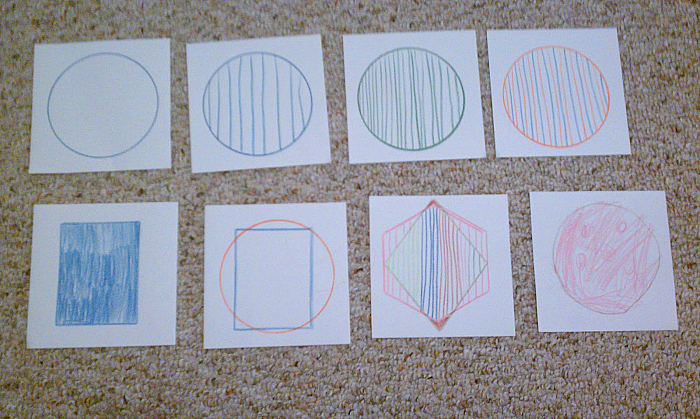
Now it’s the child’s turn. It repeats our actions step by step. Gradually, all ten figures can be drawn in this way. A combination of two or three inserts can also be made.
This material allows the child to “self-correct” as he can observe with the two outlines whether and by what extent he has gone outside the outline.
Environment and safety: CE marking, EN71 standard.
Not recommended for children under 3 without adult supervision.
| Weight | 5 kg |
|---|---|
| Dimensions | 14 x 14 cm each inset |
| Age | 36+ months. Age is indicative, use depends on the child's development |
Happiness is made of wood!
In stock
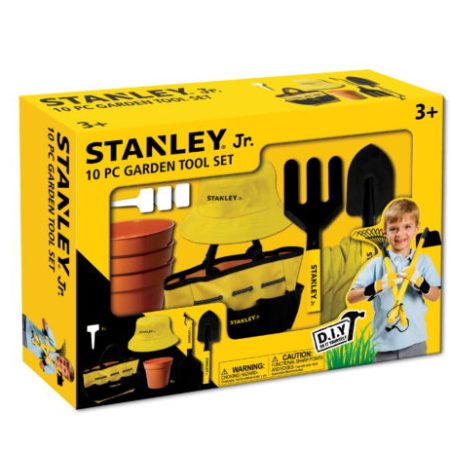
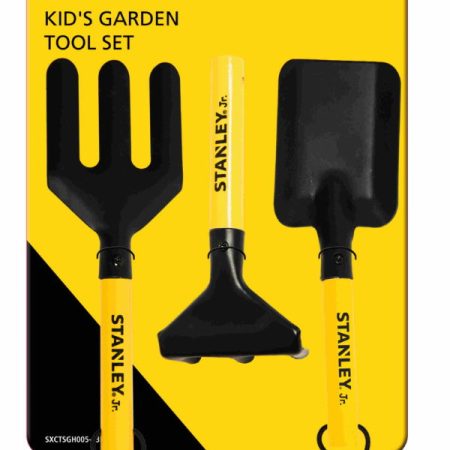
Real gardening tools for children to learn by playing and to get acquainted with nature.
In stock
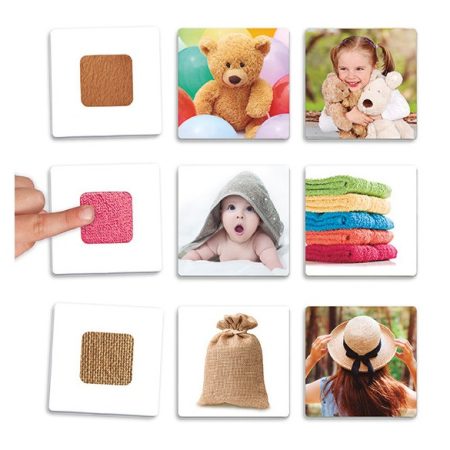
A SENSORIAL GAME of ASSOCIATION for facilitating various aspects of children’s psychological development.
 What do I learn?
-The sense of touch: tactile discrimination by recognising textures.
– Acquiring a basic vocabulary relating to the textures of objects.
– Tactile memory
In stock
Become an expert in forests with the puzzles “What fell from the tree”!
Get to know the leaves and fruits of the trees, learn their names.
You can also draw their outlines on a piece of paper and color them.
In stock
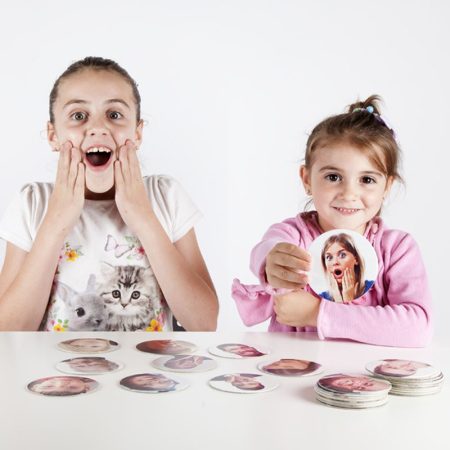
A game for describing emotions is the first step to starting to develop an emotional conscience, achieving greater self-control and managing to regulate emotions properly.
It helps to identify our own individual emotions, recognize them in other people, and take decisions about our behaviour.
What do I learn?In stock
Real gardening tools for kids to learn by playing and getting to know nature.
In stock
In stock
In stock
In stock
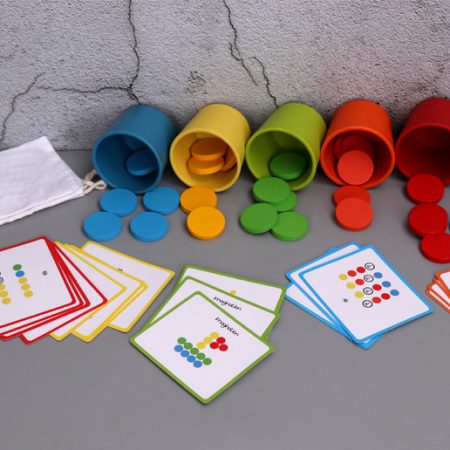
This game enhances the matching of colors and patterns.
This educational game can be played alone or with 2-3 children together. Of course, chips and cups are also suitable for free play. One child can put a picture and another can guess what is depicted in it. In addition to the existing cards, you can of course draw whatever other patterns, shapes, objects you want on some paper!
In stock
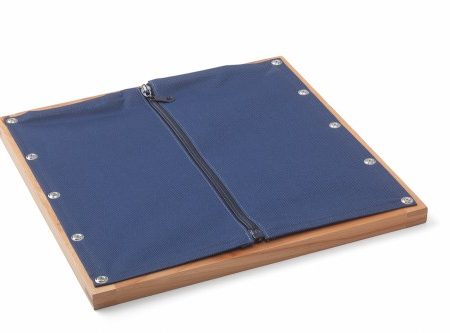
With this material, children learn, in a simple way, to open and close buckles.
In stock
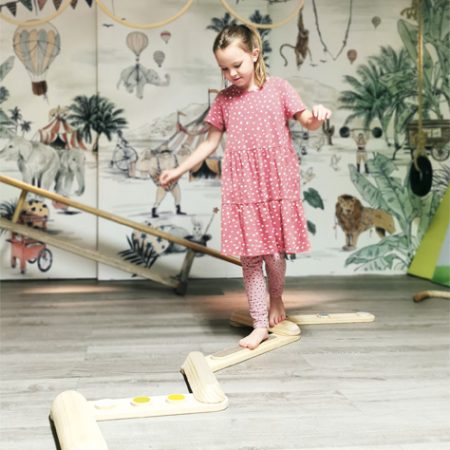
This wooden toy is useful for improving a child’s differentiation skills in a variety of sizes and shapes.
It can help boost mental development and stimulate imagination.
In stock